Size
Readable from the farthest normal seat.
Light
Plan around windows and ceiling fixtures.
Care
Protect the surface from dust and wrinkles.
Choosing a screen by the room, not just the diagonal size
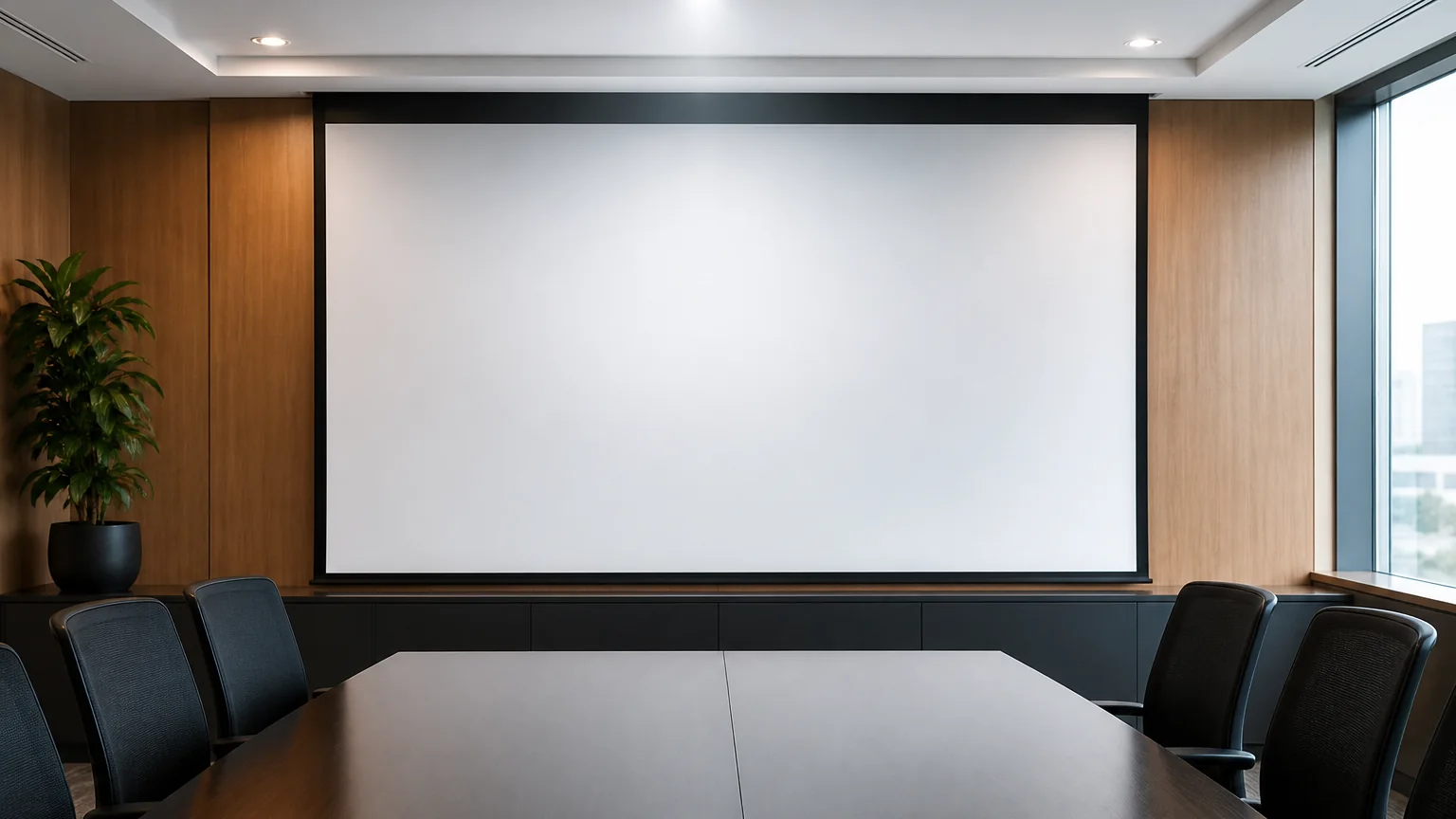
A conference room projection screen is not just a blank rectangle. It decides whether slides look sharp, whether people in the back row can read small labels, and whether a projector feels better or worse than its specifications promised. The best screen is chosen with the room, lighting, seating, and meeting style in mind.
For conference room projection screens, the useful test is practical: can a presenter walk in, connect, show normal slides, and keep the audience comfortable without explaining the room? A projection screen should reduce friction. It should make the projector easier to judge, the content easier to read, and the room easier to reset after the meeting.
Screen size should feel generous without forcing people to turn their heads or sit too close. A screen that is too small makes presenters zoom in and crop content. A screen that is too large can make the first row uncomfortable and expose every weak point in the projector, wall, or source image.
For conference room projection screens, the useful test is practical: can a presenter walk in, connect, show normal slides, and keep the audience comfortable without explaining the room? A projection screen should reduce friction. It should make the projector easier to judge, the content easier to read, and the room easier to reset after the meeting.
Ambient light is often the hidden challenge. Conference rooms have glass walls, overhead fixtures, hallway spill, and windows that rarely disappear completely. Screen material and gain can help, but they cannot fix a room where light falls directly across the image. The screen plan should include where light comes from during real meetings.
For conference room projection screens, the useful test is practical: can a presenter walk in, connect, show normal slides, and keep the audience comfortable without explaining the room? A projection screen should reduce friction. It should make the projector easier to judge, the content easier to read, and the room easier to reset after the meeting.
Mounting style changes how the room behaves. Fixed screens give a flatter, more reliable surface for dedicated presentation rooms. Pull-down screens save wall space but need careful handling and a clean stopping point. Portable screens help flexible teams, but they should be easy to set up without turning every meeting into furniture rearrangement.
For conference room projection screens, the useful test is practical: can a presenter walk in, connect, show normal slides, and keep the audience comfortable without explaining the room? A projection screen should reduce friction. It should make the projector easier to judge, the content easier to read, and the room easier to reset after the meeting.
Aspect ratio sounds technical, but it affects daily comfort. Most office slides, laptops, dashboards, and video calls fit modern widescreen formats better than older square layouts. The goal is to avoid black bars, cropped spreadsheets, and tiny text caused by forcing the wrong content onto the wrong shape.
For conference room projection screens, the useful test is practical: can a presenter walk in, connect, show normal slides, and keep the audience comfortable without explaining the room? A projection screen should reduce friction. It should make the projector easier to judge, the content easier to read, and the room easier to reset after the meeting.
Care habits protect the investment. A screen surface can collect dust, fingerprints, marker accidents, wrinkles, and edge damage. If nobody owns the reset routine, even a good screen starts looking tired. Simple storage, gentle cleaning, and clear room rules keep presentations more reliable.
For conference room projection screens, the useful test is practical: can a presenter walk in, connect, show normal slides, and keep the audience comfortable without explaining the room? A projection screen should reduce friction. It should make the projector easier to judge, the content easier to read, and the room easier to reset after the meeting.
Simple buying rule
A screen is successful when the farthest viewer can read normal slide text while the closest viewer does not feel overwhelmed.
How screens affect everyday presentation quality
A conference room projection screen is not just a blank rectangle. It decides whether slides look sharp, whether people in the back row can read small labels, and whether a projector feels better or worse than its specifications promised. The best screen is chosen with the room, lighting, seating, and meeting style in mind.
For office presentation screen planning, the useful test is practical: can a presenter walk in, connect, show normal slides, and keep the audience comfortable without explaining the room? A projection screen should reduce friction. It should make the projector easier to judge, the content easier to read, and the room easier to reset after the meeting.
Screen size should feel generous without forcing people to turn their heads or sit too close. A screen that is too small makes presenters zoom in and crop content. A screen that is too large can make the first row uncomfortable and expose every weak point in the projector, wall, or source image.
For office presentation screen planning, the useful test is practical: can a presenter walk in, connect, show normal slides, and keep the audience comfortable without explaining the room? A projection screen should reduce friction. It should make the projector easier to judge, the content easier to read, and the room easier to reset after the meeting.
Ambient light is often the hidden challenge. Conference rooms have glass walls, overhead fixtures, hallway spill, and windows that rarely disappear completely. Screen material and gain can help, but they cannot fix a room where light falls directly across the image. The screen plan should include where light comes from during real meetings.
For office presentation screen planning, the useful test is practical: can a presenter walk in, connect, show normal slides, and keep the audience comfortable without explaining the room? A projection screen should reduce friction. It should make the projector easier to judge, the content easier to read, and the room easier to reset after the meeting.
Mounting style changes how the room behaves. Fixed screens give a flatter, more reliable surface for dedicated presentation rooms. Pull-down screens save wall space but need careful handling and a clean stopping point. Portable screens help flexible teams, but they should be easy to set up without turning every meeting into furniture rearrangement.
For office presentation screen planning, the useful test is practical: can a presenter walk in, connect, show normal slides, and keep the audience comfortable without explaining the room? A projection screen should reduce friction. It should make the projector easier to judge, the content easier to read, and the room easier to reset after the meeting.
Aspect ratio sounds technical, but it affects daily comfort. Most office slides, laptops, dashboards, and video calls fit modern widescreen formats better than older square layouts. The goal is to avoid black bars, cropped spreadsheets, and tiny text caused by forcing the wrong content onto the wrong shape.
For office presentation screen planning, the useful test is practical: can a presenter walk in, connect, show normal slides, and keep the audience comfortable without explaining the room? A projection screen should reduce friction. It should make the projector easier to judge, the content easier to read, and the room easier to reset after the meeting.
Care habits protect the investment. A screen surface can collect dust, fingerprints, marker accidents, wrinkles, and edge damage. If nobody owns the reset routine, even a good screen starts looking tired. Simple storage, gentle cleaning, and clear room rules keep presentations more reliable.
For office presentation screen planning, the useful test is practical: can a presenter walk in, connect, show normal slides, and keep the audience comfortable without explaining the room? A projection screen should reduce friction. It should make the projector easier to judge, the content easier to read, and the room easier to reset after the meeting.
For product comparisons, visit LeStallion’s guide to best projection screens for conference rooms.
Previous cloud reference: best projectors for office presentations.